

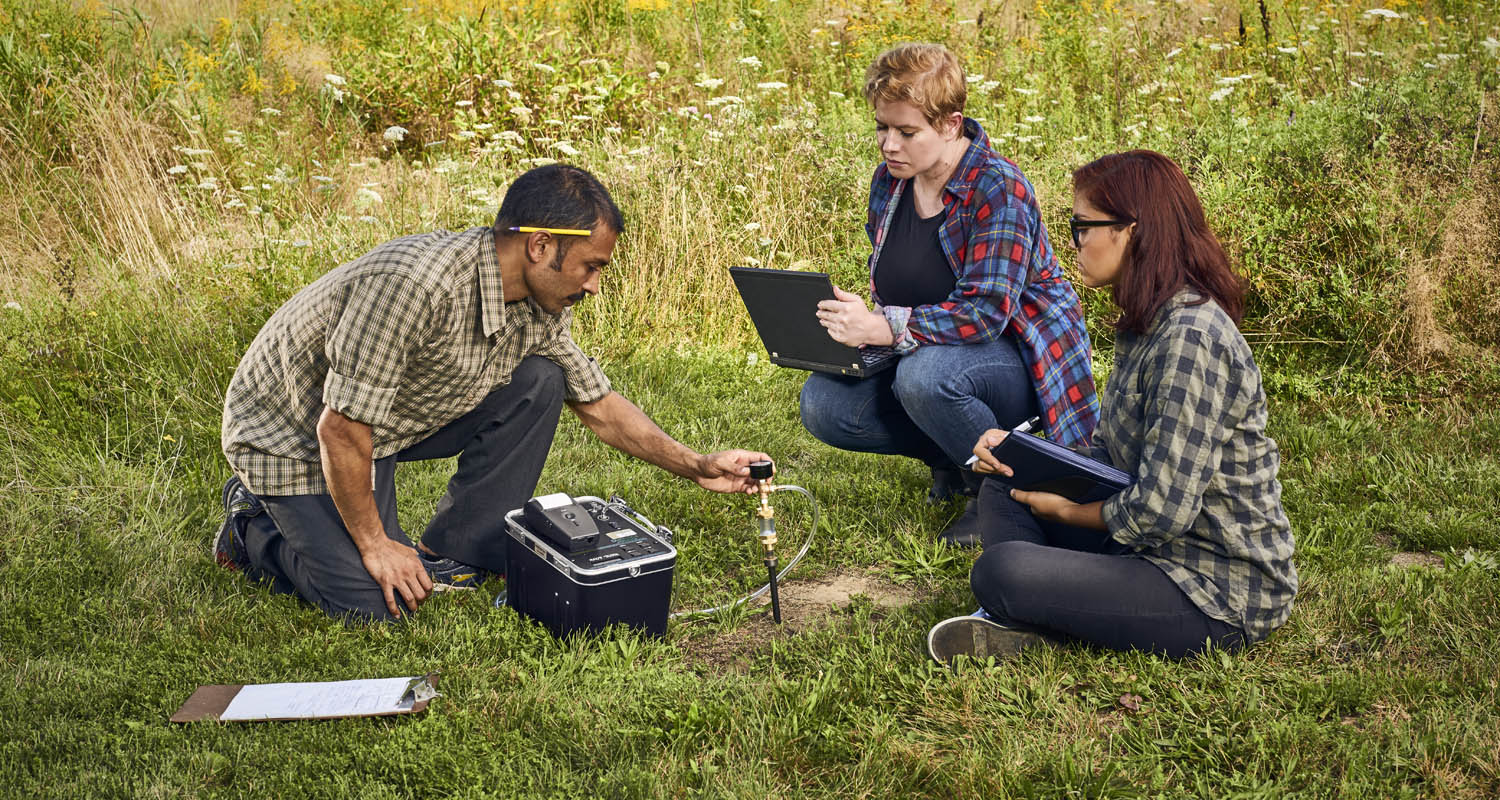
When measuring radon underground, it is essential to collect samples without exposing them to the outside air. We offer two heavy-duty soil probes for this purpose: the Hardened Steel Soil Gas Probe, and the Stainless Steel Soil Gas Probe. The specifications of these two soil gas probes are listed below.
DURRIDGE’s Soil Gas Probes operate anywhere above the water table, preferably in soil containing few stones. Each Soil Gas Probe includes a Water Stop assembly, consisting of a Vacuum Gauge and Water Shutoff Valve. This prevents groundwater from being pulled into the RAD8 and RAD7.
There are three modes of soil gas measurement. One is by obtaining a discrete air sample in GRAB mode. Another is to continuously monitoring the soil gas using the standard RAD8 or RAD7 protocol, in which the instrument’s pump operates intermittently, pulling soil gas into the measurement chamber at a low rate of speed. The third mode involves continuous pump activity and short 5-minute cycles, making it possible to measure thoron in soil gas. The soil gas sample may also be pumped out of the ground by a sampling pump, and fed to a Tedlar sample bag for later analysis by the RAD8 or RAD7.
In moist environments, the Soil Gas Probes may be used in conjunction with the DURRIDGE DRYSTIK and Water Stop accessories, using the supplied plastic tubing.
Hardened Steel Soil Gas Probe
Designed to be simple and effective and ideal for use in firm soil, the Hardened Steel Soil Gas Probe consists of a 36” (91 cm) hollow steel tube with gas inlet holes, capped with a screw-on tip of wider diameter to prevent soil from entering the sampling tube. Also supplied with the Probe is a T-Handle and a Water Stop assembly consisting of a Vacuum Gauge mounted on a Water Shutoff Valve. An included slide hammer is used to drive the Probe into the ground. A 10 ft (3.05 m) length of plastic tubing and a roll of Teflon tape are provided, along with the necessary adaptors, and a roll of Teflon tape to seal the connections.
Stainless Steel Soil Gas Probe
The Stainless Steel Soil Gas Probe is suitable for regular soil that is not extremely firm. The Probe assembly consists of a 14” (35.6 cm) long Probe Tip and a 36” (91.4 cm) long Probe Extension, both of which contain Rod Inserts. Also included is a T-handle and a barbed hose adapter. There are two couplers, one for the T-handle and the other between the Probe Extension and the Probe Tip. The two Rod Inserts also have a coupler to join them together. The Stainless Steel Soil Gas Probe also contains a Water Stop, which consists of a Vacuum Gauge mounted on a Water Shutoff Valve. Additionally, 10 ft (3.05 m) of plastic tubing, an adapter to 5/16” (0.8 cm) inner diameter, and a roll of Teflon tape are provided.
Soil Gas Probe Specifications
| Hardened Steel Soil Gas Probe | Stainless Steel Soil Gas Probe | |
|---|---|---|
| Suited For | Hard packed soil | Soft soil |
| Probe Material | Hardened Steel | Stainless Steel |
| Water Stop | Included | Included |
| Insertion Method | Use Slide Hammer or push into ground using T-Handle | Push into ground using T-Handle |
| Removal Method | Pull out using T-Handle | Pull out using T-Handle |
| Hose Connectors | Female NPT thread and O-ring | Female hose connector |
| Maintenance | Clean and oil after use | Basic cleaning recommended |
| Shipping Dimensions | 48″ x 4″ x 4″ (122 cm x 10 cm x 10 cm) | 48″ x 4″ x 4″ (122 cm x 10 cm x 10 cm) |
| Shipping Weight | 16 pounds (7.3 kg) | 7 pounds (3.2 kg) |
| Additional Notes | None | Metal Joints may be taped to prevent outside air from diluting the sample |
Hardened Steel Soil Gas Probe |
$1,695.00Add to order |
Stainless Steel Soil Gas Probe |
$1,425.00Add to order |
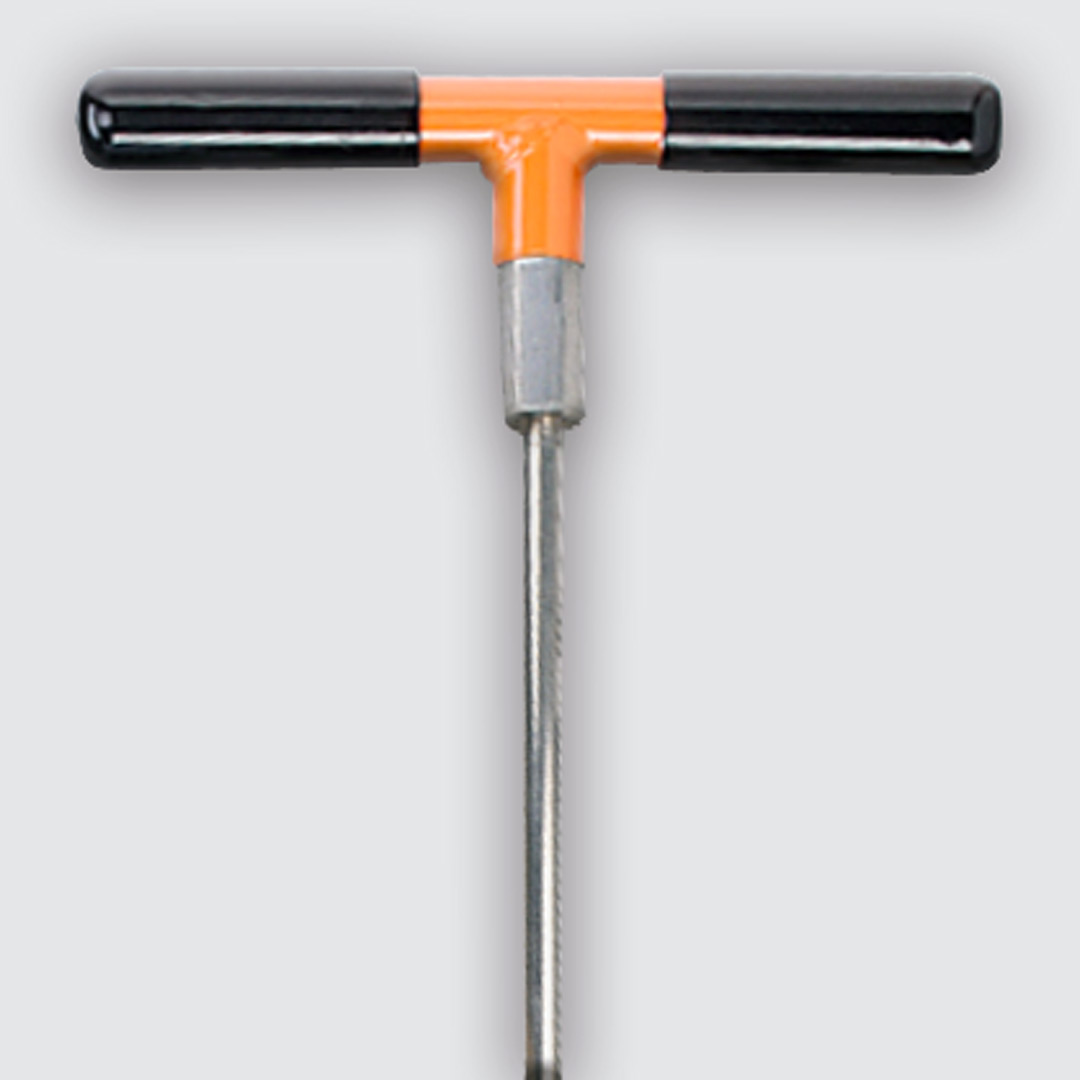
Stainless Steel Soil Gas Probe with T-Handle attached
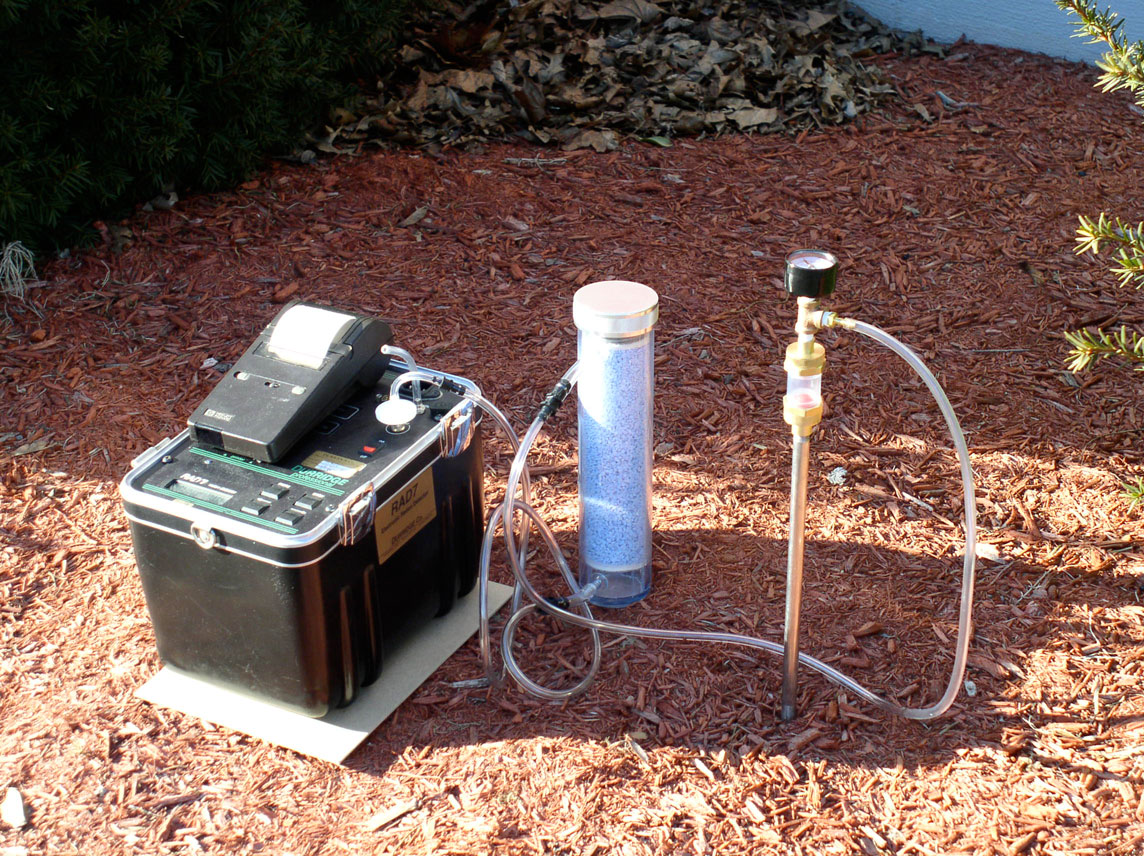
Soil Gas Probe configuration
Documentation
Featured Articles
Soil Gas Measurement (HTML)